Best Suit Fabrics for Bangkok’s Hot and Humid Weather
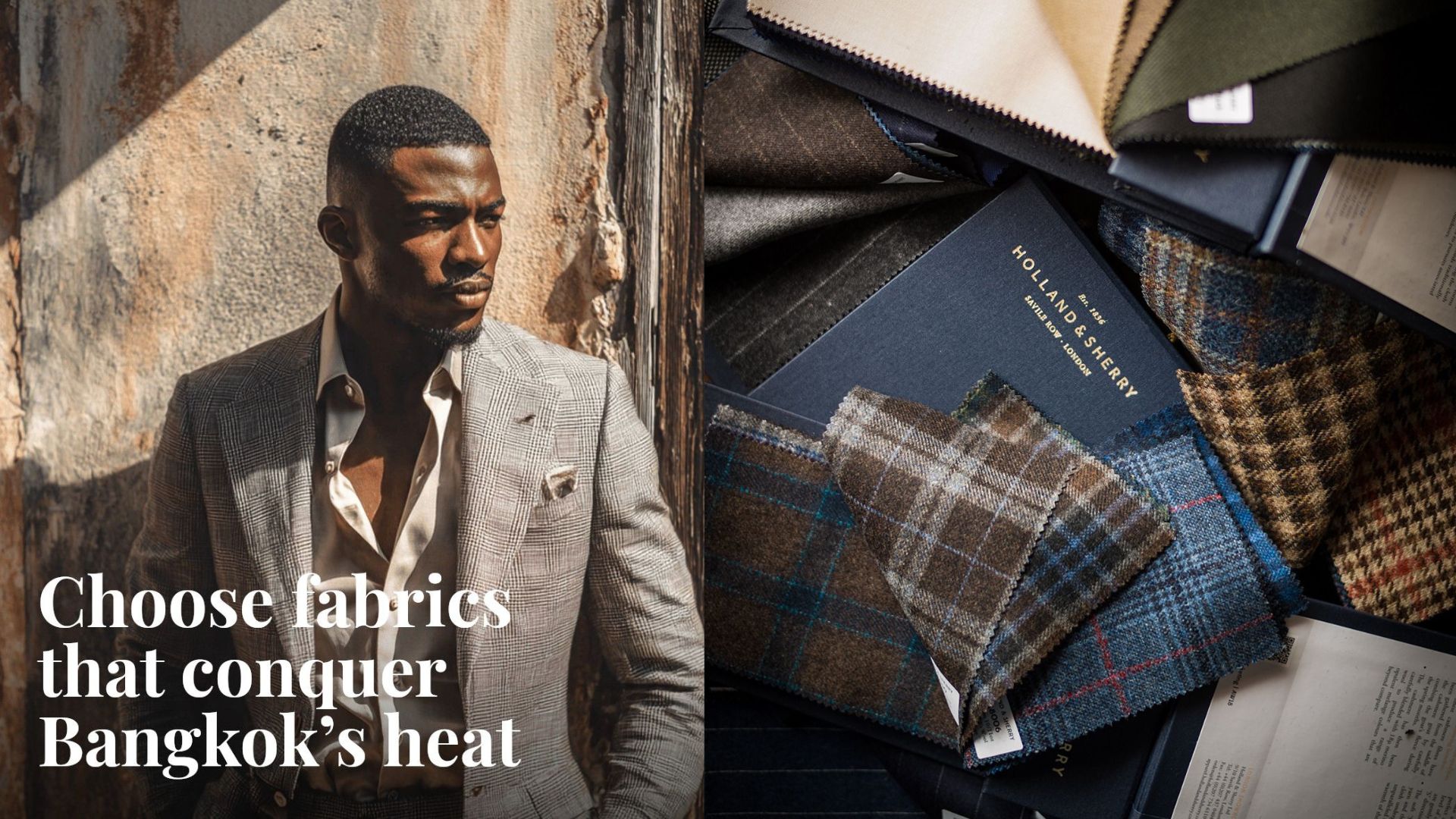
Choosing the right suit fabric is one of the most important decisions when having a suit tailored in Bangkok.
Bangkok is known for its warm tropical climate, with hot temperatures and periods of high humidity throughout the year. The Thai Meteorological Department regularly records high temperatures and significant humidity in Bangkok, while weather conditions can vary considerably by season.
That means a suit designed for a cool European climate may not be the best choice for everyday wear in Thailand.
The good news is that you do not have to choose between looking elegant and staying comfortable.
With the right fabric, weave, weight, construction, and fit, a well-tailored suit can be comfortable in Bangkok while maintaining the sharp appearance expected from quality tailoring.
At Kim Bespoke Bangkok, fabric selection is an important part of creating a suit that suits both the individual and the environment. In this guide, we explain the best suit fabrics for Bangkok’s hot and humid weather, including tropical wool, linen, cotton, and breathable fabric blends.
What Makes a Suit Fabric Suitable for Bangkok?
Before choosing a fabric, it is useful to understand what makes a material suitable for a hot and humid climate.
For Bangkok, a good warm-weather suit fabric should ideally provide:
- Breathability
- Good air circulation
- A comfortable weight
- Moisture management
- Good wrinkle recovery
- Appropriate structure
- Comfort during movement
- Suitability for the occasion
- A refined appearance
However, there is no single fabric that is perfect for every situation.
A fabric that works beautifully for a beach wedding may not be the best choice for a formal business meeting. Similarly, the lightest possible fabric is not necessarily the best option if you need a suit that maintains its shape throughout a long working day.
The best choice depends on where you will wear the suit, how often you will wear it, and how formal you want it to be.
The Best Suit Fabrics for Bangkok
Tropical Wool — The Best All-Round Choice
If you need one versatile fabric for a bespoke suit in Bangkok, lightweight tropical wool is one of the strongest choices.
Wool may seem like an unusual recommendation for a hot climate, but lightweight, breathable wool can perform very well in warm weather. High-twist tropical wool fabrics are designed to be lighter and more breathable than heavier cold-weather wool.
They can also retain the structure and elegance expected from a traditional suit.
Why choose tropical wool?
Tropical wool can offer:
- Excellent breathability
- Natural drape
- Good wrinkle recovery
- A polished appearance
- Excellent versatility
- Suitability for business and formal occasions
This makes tropical wool particularly useful for:
- Business suits
- Executive suits
- Office wear
- Weddings
- Formal dinners
- Business travel
- Everyday tailoring
High-twist and tropical-weight wool fabrics are widely recommended for hot-weather tailoring because they can provide airflow and wrinkle resistance while retaining the structure of a tailored garment.
Is wool too hot for Bangkok?
Not necessarily.
The word “wool” covers a very wide range of fabrics. A heavy winter wool is obviously unsuitable for Bangkok's heat, but lightweight tropical wool is a very different fabric.
When speaking with your tailor, ask about lightweight, breathable, open-weave or high-twist wool fabrics designed for warm climates.
Linen — Excellent for Maximum Breathability
Linen is one of the most popular fabrics for hot-weather clothing.
Made from flax fibers, linen is naturally breathable and allows air to circulate through the fabric. It is particularly well suited to relaxed summer tailoring and tropical destinations.
A linen suit can be an excellent choice for:
- Beach weddings
- Destination weddings
- Daytime events
- Resort wear
- Outdoor occasions
- Smart-casual dressing
- Holiday wardrobes
The biggest advantage of linen
The main advantage is airflow.
Linen has a relaxed appearance and can feel comfortable in hot weather, which makes it an attractive choice for Bangkok's climate.
The disadvantage of linen
Linen wrinkles.
For some people, this is part of its charm. The natural wrinkles create a relaxed, sophisticated appearance.
However, if you need a suit to remain extremely crisp throughout a long business day, linen may not be your first choice.
For a more structured appearance, consider a linen-wool or linen-silk blend.
Linen-Wool Blends — A Balance Between Comfort and Structure
If you like the breathability of linen but want more structure and wrinkle recovery, a fabric blend can be an excellent alternative.
A linen-wool blend combines characteristics of both fibers.
Linen can contribute breathability and a relaxed texture, while wool can provide drape, structure, and better recovery from creasing.
This type of fabric can work particularly well for:
- Business-casual suits
- Daytime weddings
- Travel
- Smart summer tailoring
- Dinner jackets
- Resort tailoring
A blend can therefore provide a useful middle ground between the relaxed character of linen and the polished appearance of wool.
Cotton — Lightweight and Versatile
Cotton is another option for warm-weather tailoring.
Cotton suits tend to have a more relaxed character than traditional wool suiting and can be comfortable for casual or semi-formal occasions.
Cotton can be particularly suitable for:
- Casual suits
- Weekend wear
- Travel
- Smart-casual events
- Unstructured jackets
- Lightweight trousers
However, cotton can wrinkle more readily than many wool fabrics and may not provide the same drape or recovery as a good tropical wool.
For a highly formal business suit, lightweight wool may therefore be preferable.
Wool-Mohair Blends — Crisp and Breathable
For clients who want a sharper, more structured appearance, a wool-mohair blend can be worth considering.
Mohair is known for its crisp handle and distinctive surface. When blended with wool, it can create a fabric with excellent shape retention and a clean, formal appearance.
This can make it suitable for:
- Formal business suits
- Evening events
- Weddings
- Tuxedo-inspired tailoring
- Structured jackets
The exact comfort of a wool-mohair fabric depends on the weave, weight, blend, and construction, so it is best selected with an experienced tailor.
Fresco and Open-Weave Wool — Designed for Airflow
Another fabric category worth discussing with your tailor is open-weave or high-twist wool, including fabrics commonly referred to as fresco.
The open structure can encourage airflow through the cloth while maintaining the appearance and structure of traditional suiting.
This can make it particularly interesting for people who:
- Wear suits regularly
- Work in Bangkok
- Travel frequently
- Need wrinkle resistance
- Prefer a structured suit
- Want something more formal than linen
For many professionals, this type of fabric can be an excellent solution when a suit needs to look polished while remaining suitable for warm weather.
What Fabric Weight Is Best for Bangkok?
Fabric weight is an important consideration when choosing a suit for a tropical climate.
However, lighter does not always mean better.
An extremely lightweight fabric may feel cool but may not provide the structure, durability, or drape you want from a suit.
Instead of choosing a fabric solely by its weight, consider the complete combination of:
fabric + weave + construction + lining + fit.
Your tailor can help determine an appropriate fabric weight based on how and where you will wear the suit.
For example, a suit designed primarily for outdoor daytime events may require a different fabric from one intended for an air-conditioned office and evening dinners.
What Is the Best Suit Fabric for Bangkok Business Wear?
For a professional business suit, lightweight tropical wool or an appropriate open-weave wool is often one of the most versatile choices.
It offers a balance between:
- Professional appearance
- Breathability
- Structure
- Comfort
- Wrinkle recovery
- Versatility
A navy, charcoal, or medium-grey tropical wool suit can form the foundation of a professional wardrobe.
It can be worn for meetings, presentations, dinners, conferences, and business travel.
What Is the Best Fabric for a Wedding in Thailand?
The answer depends on the wedding.
For a formal evening wedding, lightweight wool, wool-mohair, or another refined suiting cloth can provide a sophisticated appearance.
For a daytime or outdoor wedding, linen, linen blends, or lightweight tropical wool may be more appropriate.
For a destination wedding in Thailand, fabric selection should take into consideration:
- Venue
- Time of day
- Dress code
- Outdoor or indoor setting
- Season
- Personal style
- Expected temperature
- Level of formality
A bespoke tailor can help balance these factors rather than simply choosing the lightest fabric available.
Linen vs Tropical Wool: Which Is Better for Bangkok?
This is one of the most common questions when choosing a custom suit in Bangkok.
The answer depends on what you need.
Choose linen if:
- You prioritize maximum breathability
- You like a relaxed appearance
- You are attending a daytime or outdoor event
- You do not mind natural wrinkles
- You want a resort or destination-wedding look
Choose tropical wool if:
- You need a professional business suit
- You want better wrinkle recovery
- You prefer a structured silhouette
- You travel frequently
- You want one suit that works across multiple occasions
Neither fabric is universally “better.”
The right fabric is the one that matches your lifestyle and the purpose of the suit.
What About the Suit Lining?
Fabric is not the only factor that affects comfort.
The lining and construction of the jacket also matter.
A suit can use a lightweight outer fabric but still feel warm if the internal construction is unnecessarily heavy.
Depending on the garment and desired structure, your tailor may discuss options such as:
- Full lining
- Partial lining
- Unlined construction
- Lightweight lining materials
The correct choice depends on the design, fabric, structure, and intended use.
This is another reason why buying a suit based only on the fabric name is not enough.
Does Suit Color Matter in Bangkok's Heat?
Yes, particularly when you spend time outdoors.
Lighter colors generally absorb less solar radiation than very dark colors, which can influence how a garment feels in direct sunlight.
For daytime and outdoor wear, colors such as:
- Light grey
- Beige
- Stone
- Light blue
- Tan
- Cream
can work particularly well.
For business settings, however, darker colors such as navy and charcoal remain extremely versatile—especially when much of the day is spent indoors.
The fabric, construction, fit, and environment all matter alongside color.
How Should a Suit Fit in Bangkok's Climate?
A good fit is important in every climate, but it becomes especially noticeable in hot weather.
A suit that is excessively tight can restrict movement and reduce comfort.
For warm-weather tailoring, consider a fit that allows comfortable movement while maintaining a clean silhouette.
Your tailor can consider:
- Shoulder width
- Jacket length
- Chest ease
- Sleeve length
- Trouser rise
- Trouser width
- Jacket construction
- Your posture and proportions
A well-designed bespoke suit should feel comfortable while still looking refined.
How to Keep Your Suit Fresh in Bangkok's Humidity
Even the best fabric needs proper care.
To help your suit perform well in Bangkok:
Give your suit time to rest
Avoid wearing the same suit every day when possible.
Use a proper hanger
A good shaped hanger helps the jacket maintain its structure.
Allow the suit to air
After wearing your suit, allow it to air in a suitable environment before putting it back into your wardrobe.
Avoid unnecessary washing
Follow the care instructions for the specific fabric.
Use professional pressing when necessary
A professional tailor or dry cleaner can help maintain the garment's appearance when appropriate.
Store it properly
A breathable garment bag can help protect the suit from dust while allowing appropriate ventilation.
What Suit Fabric Should You Ask Your Bangkok Tailor For?
Instead of simply saying, “I want a lightweight fabric,” explain how you intend to wear the suit.
For example:
“I need a business suit that I can wear comfortably in Bangkok, but I also want it to look formal and hold its shape.”
Or:
“I am attending an outdoor wedding in Thailand and want something breathable and elegant.”
This gives your tailor useful information.
An experienced tailor can then recommend appropriate fabrics based on your needs rather than simply choosing the lightest material.
The Best Suit Fabric Depends on the Person
There is no single fabric that is perfect for everyone.
A corporate executive who spends most of the day in an air-conditioned office may have completely different requirements from a groom attending an outdoor wedding.
Similarly, a frequent traveler may prioritize wrinkle recovery, while someone looking for a relaxed holiday wardrobe may prefer linen.
The best fabric is therefore determined by:
Climate + Occasion + Comfort + Style + Maintenance + Personal Preference
That is what makes bespoke tailoring different from simply buying a suit from a rack.
Why Choose Kim Bespoke for a Suit in Bangkok?
Choosing the right fabric is only the beginning of creating a great suit.
At Kim Bespoke Bangkok, the tailoring process can be tailored around your individual requirements, from the intended use of the garment to fabric selection, fit, styling, and finishing.
Whether you need a business suit, wedding suit, tuxedo, custom shirt, or bespoke wardrobe, choosing fabrics appropriate for Bangkok's climate can make a significant difference to comfort and wearability.
Our goal is not simply to create a suit that looks good in the fitting room.
It is to create a garment that works for you, your lifestyle, your occasions, and the Bangkok climate.
If you are looking for a bespoke tailor in Bangkok and would like advice on choosing a breathable, elegant fabric for your next suit, contact Kim Bespoke to arrange a consultation.
Frequently Asked Questions
What is the best suit fabric for Bangkok?
For many people, lightweight tropical wool is one of the most versatile choices for Bangkok because it can combine breathability, structure, professional appearance, and wrinkle recovery. Linen is another excellent option for relaxed and outdoor occasions.
Is wool suitable for Bangkok's hot weather?
Yes. Lightweight tropical and open-weave wool can be suitable for hot climates. Heavy winter-weight wool is a different matter and is generally unsuitable for Bangkok's heat.
Is linen better than wool for hot weather?
Not necessarily. Linen can provide excellent breathability but wrinkles easily. Lightweight tropical wool can provide better structure and wrinkle recovery. The best choice depends on the occasion and your personal preferences.
What is the best fabric for a business suit in Bangkok?
Lightweight tropical wool or an appropriate open-weave wool is often an excellent choice for business wear because it can maintain a professional appearance while offering better comfort than heavier suiting fabrics.
What is the best fabric for a wedding suit in Thailand?
For a formal wedding, lightweight wool can be an excellent choice. For an outdoor or beach wedding, linen or a linen blend may be more appropriate. The venue, time of day, dress code, and personal style should all be considered.
What is tropical wool?
Tropical wool generally refers to lightweight wool fabrics designed for warmer conditions. Many use high-twist yarns and relatively open weaves to improve airflow while retaining the appearance and structure associated with wool suiting.
Should I choose a lightweight suit for Bangkok?
Lightweight fabric can improve comfort, but the lightest fabric is not automatically the best. Weave, construction, lining, fit, and intended use are equally important.
Can I wear a dark suit in Bangkok?
Yes. Navy and charcoal suits remain highly practical for professional and formal occasions. If you will spend significant time outdoors, lighter colors can feel more comfortable in direct sunlight.
Final Thoughts: Choosing the Right Fabric for Bangkok
A suit for Bangkok should not simply be a lighter version of a suit designed for a colder country.
The climate should influence the fabric, weave, construction, lining, fit, and even color.
For a versatile business wardrobe, consider lightweight tropical wool or an open-weave wool. For relaxed summer occasions and outdoor weddings, linen and linen blends can be excellent choices. For casual tailoring, lightweight cotton can offer a comfortable alternative.
Most importantly, choose the fabric based on how you actually plan to wear the suit.
A knowledgeable bespoke tailor can help you find the balance between breathability, elegance, durability, and comfort.
Looking for the right fabric for your next suit in Bangkok?
Speak with Kim Bespoke Bangkok about creating a suit designed around your style, requirements, and the tropical climate.